
Beyond Fragmented Governance: Reimagining the Caribbean Sea as a Common Patrimony - World Oceans Day 2026
By: Robin Alberto Montano
For too long, we have viewed the ocean as a distant inexhaustible resource, despite its essential role in regulating climate, sustaining biodiversity, and supporting livelihoods. (United Nations, 2026). As we observe World Oceans Day 2026 under the theme "REIMAGINE: Beyond the world we know, a new relationship with our ocean," the United Nations challenges us to reflect and rethink how we view, value, govern and interact with the ocean. This theme calls for a fundamental shift in perspective from viewing marine spaces as reservoirs for extraction to recognizing them as interconnected life-support systems that require collective stewardship.
Nowhere is this shift more urgent, and arguably more consequential, than in the Greater Caribbean. The Caribbean Sea is the region’s most valuable shared natural asset, serving as an economic engine and also the foundational landscape of regional identity, ancestral heritage, and shared coastal culture. It underpins the livelihoods of artisanal fishers; it sustains the marine ecosystems that significantly contribute to regional Gross Domestic Product (GDP) through tourism (WTTC, 2025); and it facilitates maritime trade that supports regional development (Patil et al., 2016). Yet, despite its ecological, cultural, and economic significance, the Caribbean Sea has largely been managed as a fragmented collection of national jurisdictions rather than as a single, interconnected marine ecosystem. The imperative to govern this shared asset collectively is therefore a regional priority. This approach is in alignment with the global commitments to conserving and sustainably using our marine resources under Sustainable Development Goal (SDG) 14, Life Below Water.
This institutional patchwork of fragmented governance is wholly inadequate for the scale of the transboundary challenges, such as climate change, marine pollution, overfishing, coral degradation, and sargassum influxes, bearing down on the region. True climate and economic resilience can no longer rely on uncoordinated, state-centric actions. It demands a unified, scientifically grounded regional framework spearheaded by the Association of Caribbean States (ACS) to achieve the United Nations (UN) designation of the Caribbean Sea as a Special Area in the context of sustainable development, consequently recognizing the Caribbean Sea as a globally unique, legally protected domain. Reimagining the sea means strengthening regional organizations, shared laws, and scientific centers capable of defending it.
For centuries, regional interactions with the Caribbean Sea have been dictated by what the UN describes as "habits of taking" (UN DOALOS, 2026). Today’s environmental challenges are not isolated incidents, but rather the predictable systemic symptom of an outdated, purely transactional relationship with the marine environment, manifesting in three deeply disruptive ways.
The first manifestation of this extractive mindset is evident in fisheries. Fisheries and aquaculture support nearly 540,000 jobs across CARICOM countries, representing approximately 6% of the labour force (CRFM, 2025). However, these benefits conceal growing ecological pressures. More than half of commercially harvested fish stocks in the Caribbean are overexploited or depleted, while another 40% are fully exploited (CRFM, 2020). Observing the region’s exploitative habits in relation to its fish stock, it is apparent that the region is increasingly drawing from these stocks, among other marine resources, faster than they can naturally recover. This extractive deficit directly threatens coastal food security pathways and undermines the region’s ability to meet SDG 14 (Life Below Water) and SDG 2 (Zero Hunger). SDG 14.4 specifically called for the end to overfishing and the restoration of fish stocks to biologically sustainable levels by 2020, but this deadline has passed, and the targets have been missed, illustrating a governance failure with compounding ecological and economic consequences for the communities most dependent on these resources.
This challenge is compounded by land-based pollution. Agricultural runoff, untreated wastewater, and plastic waste continue to flow into shared marine environments despite regional commitments under the Cartagena Convention and its Land-Based Sources Protocol (UNEP-CEP, n.d.). These pollutants damage coral reefs and coastal habitats that serve as critical nursery grounds for fish populations. Beyond its immediate importance to fisheries, coral reefs, and coastal ecosystems, protecting this marine network is essential to maintaining the ocean's broader, indispensable role in regional climate resilience. Ultimately, the assumption that the sea can absorb unlimited waste while continuing to provide unlimited resources is biologically untenable. Declining fish stocks and degraded ecosystems demonstrate the consequences of this approach.
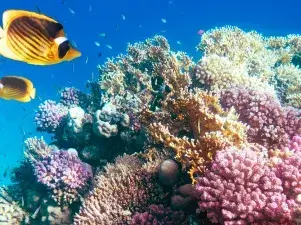
The second manifestation of this broken relationship is found in coastal tourism. Tourism generates approximately USD 475 billion annually and accounts for around 15% of regional GDP (World Bank, 2026; WTTC, 2025). This intense economic reliance on marine assets makes the sector's relationship with those same ecosystems deeply paradoxical. Coastal development frequently prioritizes short-term economic gains over long-term ecological resilience. This, once again, contradicts the commitments enshrined in SDG 14, but also in SDG 8 (Decent Work and Economic Growth), because a tourism economy that systematically degrades the ecosystems on which it depends is not delivering sustainable growth. It is consuming its own foundation. Mangroves are being removed to make way for infrastructure, reducing natural protection against storm surges and coastal erosion, thus increasing vulnerability of coastal communities (United Nations, 2021). At the same time, coral reefs are experiencing unprecedented stress from marine heatwaves, pollution, and sediment runoff. Data shows that Caribbean hard coral cover has plummeted to a baseline of just 14%, with an overall decline of 48% since 1980, while invasive macroalgae cover has surged by 85% (GCRMN, 2025). Given that Caribbean reefs generate USD 6.2 billion annually, this degradation is a direct economic threat to regional stability. The economic case for protection is as powerful as the ecological one.
The third and perhaps most significant manifestation of the region’s broken relationship with the sea is institutional fragmentation. Marine ecosystems do not adhere to political boundaries. Ocean currents transport pollution across jurisdictions, fish stocks migrate between national waters, and sargassum blooms affect multiple countries simultaneously. Yet governance mechanisms remain largely state-centric.
The consequences are evident in uneven enforcement of fisheries regulations, inconsistent ecosystem monitoring, and limited regional coordination in accessing climate finance. Individual countries are often left to confront shared challenges with limited resources and varying levels of institutional capacity. As the ACS Caribbean Sea Commission (CSC) has repeatedly emphasized in its biennial reports to the UN General Assembly, sustainable development in the region requires integrated governance approaches that transcend national borders.
To rewrite this relationship, the region must shift from isolated national research to a fully coordinated regional response. The ACS facilitates this by driving cross-border scientific and technical cooperation, harmonizing research methodologies, and institutionalizing knowledge sharing among its Member States and Associate Members. Through targeted capacity building and technology transfer, the ACS works to dismantle data silos to build a unified ecosystem of co-produced marine intelligence. This ensures that the entire Membership possesses the shared data and institutional strength needed to manage oceanic shifts collectively.
A landmark milestone in this scientific pivot occurred in May 2026 with the official physical inauguration of the Korea-ACS Joint Ocean Research Center (K-ACS JORC) at the Instituto de Investigaciones Marinas y Costeras (INVEMAR) in Santa Marta, Colombia (ACS, 2026a). Established through strategic triangular cooperation with the Republic of Korea, Colombia, and the ACS, this specialized center acts as a unified science-policy interface for the entire Greater Caribbean. Its core focus encompasses identifying and executing joint research projects, fostering knowledge-sharing and capacity-building, and establishing regional networks across the marine sector, with the goal of collectively responding to transboundary marine challenges, including coastal erosion, the degradation of marine ecosystems, and the growing impacts of sargassum.
In addition to this development of cooperative infrastructure, the ACS has also launched its Sargassum Sub-Commission (SSC) in October 2025 to spearhead a genuinely reimagined approach to regional ocean governance. Moving past the outdated, reactive view that treats pelagic Sargassum blooms merely as an isolated shoreline nuisance to be cleared for tourist comfort, the SSC reframes this transboundary challenge as a catalyst for regional coordination and circular blue economy innovation. The SSC emphasises the urgent need to unify regional forecasting models, establish real-time early-warning systems, and build cross-border capacity for sustainable technological adaptation. As a key institutional regional mechanism for regional convention, collaboration, and coordination, it facilitates a joint response that views the changing ocean not just as a source of crisis, but as a frontier for sustainable biomass innovation, structural valorization, and shared regional opportunity.Breaking these embedded regional habits, however, requires a shared political will codified into high-level diplomacy. Over the last several years, the ACS has constructed a robust legal and strategic architecture to serve as the blueprint for this new marine covenant.
This trajectory was advanced with the Declaration of Antigua (ACS, 2023), where Member States and Associate Members committed to looking beyond national borders, re-affirming the Caribbean Sea a common patrimony requiring a singular defensive framework. This political resolve was advanced by the Declaration of Montería (ACS, 2025b), which serves as the region’s collective roadmap for a modern relationship with the sea, mandating the strengthened protection and preservation of the Caribbean Sea, the coordinated management of marine resources, and the integration of Afro-descendant and Indigenous peoples as active participants in joint ecosystem management and community-based eco-tourism.
These commitments are institutionalized within the ACS Strategic Plan: Greater Caribbean 2035 — A Shared Horizon From Our Common Sea towards Sustainable Development and Well-Being (ACS, 2026b). This long-term strategy provides the long-term alignment mechanism that binds regional blue growth to international biodiversity and climate mandates. It is designed to position the ACS as a coherent mediator with global institutions and frameworks, including the UNFCCC, the Convention on Biological Diversity, and the Kunming-Montreal Global Biodiversity Framework, ensuring that the Caribbean Sea's needs are represented in the negotiations and financing mechanisms that will shape the ocean governance landscape through mid-century.
Policy declarations and scientific partnerships, however robust, remain incomplete without a formal international legal status that compels global recognition. This is where the Caribbean Sea Commission (CSC) becomes irreplaceable, and where the region's most ambitious institutional project comes into clearest view. Established to champion the preservation of the basin, the CSC is the only intergovernmental body in the Western Hemisphere specifically engineered to promote scientific and technical cooperation among policymakers across the Greater Caribbean on matters relating to the integrated management of a shared marine basin.
One of the fundamental pillars of the CSC's mandate, and a concrete expression of the UN's REIMAGINE ethos, is its ongoing campaign to secure the Designation of the Caribbean Sea as a “Special Area in the Context of Sustainable Development” from the United Nations General Assembly (UNGA).
This designation represents a profound transformation in how international ocean governance frameworks perceive the region. Rather than viewing the Caribbean through a patchwork of isolated jurisdictions, a UNGA Special Area designation establishes a global consensus that recognizes the entire basin as a single, highly vulnerable, and interconnected ecosystem. It would strengthen the political and cooperative framework for advancing integrated ocean governance and sustainable management of the Caribbean Sea. Furthermore, it would serve as a globally recognized political platform through which the region could advocate for innovative debt-for-nature swaps, mobilize climate and development finance, and attract long-term investment in resilient blue infrastructure. It represents a powerful expression of reimagining the sea: encouraging the world to view the Caribbean not as an open international commons, but as a unique and interconnected ecosystem deserving of collective stewardship and protection.
Reimagining the Caribbean Sea requires us to abandon the illusion of its endless resilience and enter into a formal covenant of collective stewardship. Securing a stable, thriving Greater Caribbean for the generations to come hinges entirely on realizing the UNGA Special Area Designation and fully empowering the Caribbean Sea Commission.
We must ultimately recognize that the Caribbean Sea is not a geographic barrier that divides our nations, but the single, common patrimony that unites them.
References
1. United Nations. (2026). World Oceans Day 2026: REIMAGINE. United Nations Division for Ocean Affairs and the Law of the Sea (DOALOS). Retrieved from https://www.un.org/en/observances/oceans-day
2. United Nations, Division for Ocean Affairs and the Law of the Sea [UN DOALOS]. (2026). UN World Oceans Day 2026. UN World Oceans Day Official Website. Retrieved from https://unworldoceansday.org/
3. World Travel & Tourism Council [WTTC] (2025). Travel & tourism economic impact 2025: Global trends. https://researchhub.wttc.org/product/travel-tourism-economic-impact-2025-global-trends
4. Patil, P. G., Virdin, J., Diez, S. M., Roberts, J., & Singh, A. (2016). Toward a blue economy: A promise for sustainable growth in the Caribbean. World Bank.
https://documents1.worldbank.org/curated/en/965641473449861013/pdf/AUS16344-REVISED-v1-BlueEconomy-FullReport-Oct3.pdf
5. Caribbean Regional Fisheries Mechanism [CRFM]. (2025). Fisheries and aquaculture contribute over US$200 million to Caribbean exports and more than half-a-million jobs. https://crfm.int/index.php?Itemid=508&id=891%3Afisheries-and-aquaculture-contribute-over-us-200-million-to-caribbean-exports-and-more-than-half-a-million-jobs&option=com_k2&view=item
6. Caribbean Regional Fisheries Mechanism [CRFM]. (2020). Monitoring and assessment study (CRFM Technical & Advisory Document No. 2020/03). Caribbean Regional Fisheries Mechanism. https://portal.crfm.int/dataset/a0727c59-5396-4526-9e96-d8abfe37542f/resource/4b30f99c-6752-414a-aa41-837f732d5dae/download/crfm-tech-advisory-doc-2020-03-ftr-monitoring-assessment-study-11-august-2020.pdf
7. United Nations Environment Programme Caribbean Environment Programme [UNEP-CEP]. (n.d.). Pollution: Regional overview. Cartagena Convention Secretariat. https://cartagena.unepgrid.ch/regional-overview/pollution
8. World Bank. (2026). GDP (current US$) (Indicator NY.GDP.MKTP.CD). World Development Indicators. Retrieved June 3, 2026, from https://data.worldbank.org/indicator/NY.GDP.MKTP.CD
9. Global Coral Reef Monitoring Network (GCRMN). (2025, December 9). Caribbean Coral Reefs Declining: New Report Calls for Urgent Action. GCRMN / International Coral Reef Initiative. Retrieved from https://gcrmn.net/2025/12/09/caribbean-2025-report/
10. Association of Caribbean States [ACS]. (2026a). The ACS, the Republic of Colombia and the Republic of Korea inaugurate the Korea–ACS Joint Ocean Research Center in Santa Marta [Press release]. Office of the Secretary General. Santa Marta, Colombia. https://www.acs-aec.org/en/news/acs-republic-colombia-and-republic-kore…;
11. Association of Caribbean States [ACS]. (2025a). Sargassum Sub-Commission established to strengthen ocean governance in the Greater Caribbean [Press release]. Secretariat Press Release. Port of Spain, Trinidad and Tobago. https://www.acs-aec.org/en/news/acs-establishes-sargassum-sub-commission-strengthen-ocean-governance-greater-caribbean
12. Association of Caribbean States [ACS]. (2023). Declaration of Antigua Guatemala: Innovating integration through the sustainable development of the Greater Caribbean. Ninth Summit of Heads of State and/or Government of the Association of Caribbean States. Antigua, Guatemala. https://www.acs-aec.org/en/document/declaration-antigua-guatemala-innovating-integration-through-sustainable-development
13. Association of Caribbean States [ACS]. (2025b). Declaration of Montería: United for life: Towards a more sustainable Greater Caribbean (Document ID: SM/2025/10/INF.001). Tenth Summit of Heads of State and/or Government of the Association of Caribbean States. Montería, Colombia. https://www.acs-aec.org/en/document/declaracion-de-monteria
14. Association of Caribbean States [ACS]. (2026b). Strategic Plan Greater Caribbean 2035: A shared horizon: From our common sea toward sustainable development and well-being. 17th Extraordinary Meeting of the Ministerial Council of the Association of Caribbean States. Port of Spain, Trinidad and Tobago. https://www.acs-aec.org/en/document/strategic-plan-greater-caribbean-2035-shared-horizon-our-common-sea-toward-sustainable


Partager


Articles connexes
La Journée de la Grande Caraïbe : reconnaître une région partagée, renforcer un avenir commun
Par Anaïs Régina-Renel Introduction
Protéger le Cœur de la Mer des Caraïbes : Journée Mondiale de Sensibilisation aux Récifs Coralliens 2026
Par : Robin Alberto Montano
Journée internationale de la Terre Mère 2026