
Guarding the Heartbeat of the Caribbean Sea: World Reef Awareness Day 2026
By: Robin Alberto Montano
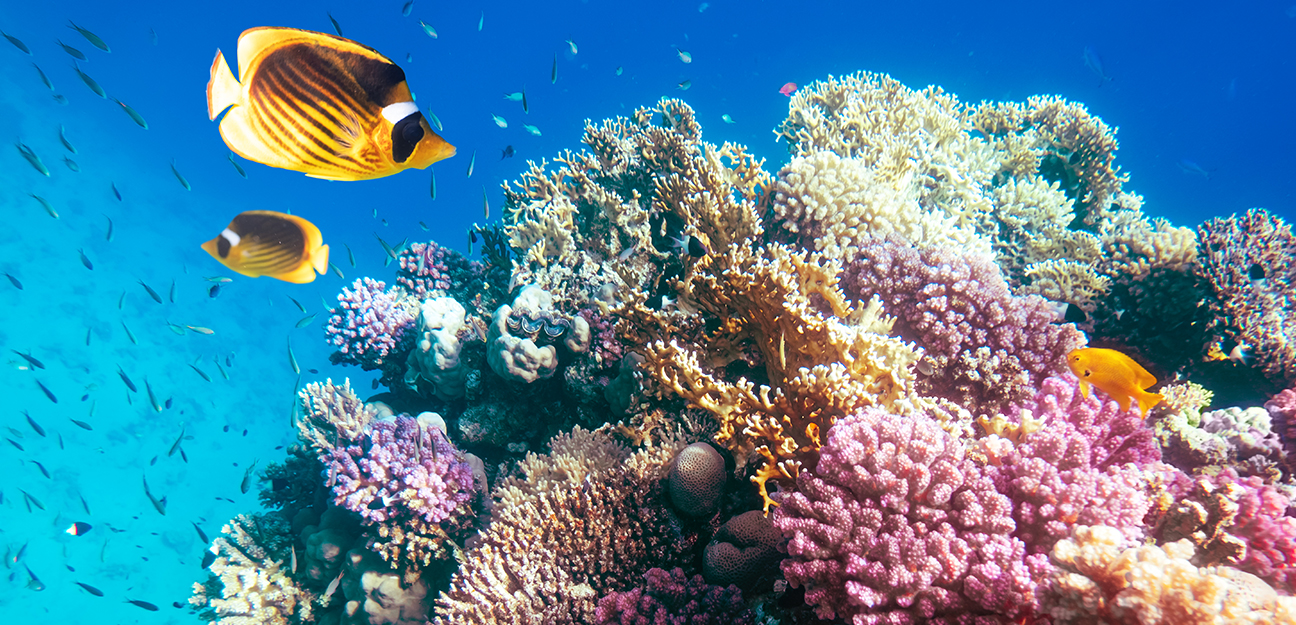
Coral reefs support a staggering 25% of all marine life despite covering less than 1% of the seafloor.[1] This underscores just how critical a role these habitats play as the biological engines of global marine biodiversity. At a regional level, the Caribbean Sea hosts approximately 10% of the world’s coral reefs, anchored by the second-largest system on Earth: the Mesoamerican Barrier Reef System, which stretches across Belize, Guatemala, Honduras, and Mexico.[2] This vibrant underwater network thus sustains marine life and provides a foundational pillar for the safety, culture, economy, and food security of coastal communities throughout the Greater Caribbean.[3]
Historically, these ecosystems have provided the bedrock upon which regional tourism and fisheries have flourished. Simultaneously, they function as vital protective infrastructure, acting as natural breakwaters that mitigate coastal erosion and buffer communities against intense wave energy and storm surges.[3] Yet, this life-support system is under siege. Escalating global temperatures, rising sea levels, ocean pollution, and severe weather events have driven a steady, alarming decline in hard coral cover across the region, threatening both marine resilience and human livelihoods. While various initiatives have emerged to address these environmental stresses, past responses have often been fragmented and uncoordinated, frequently ignoring the multi-sectoral and transboundary nature of coral reef degradation.[4][5][6] Without unified regional cooperation to address the land-based pollution, unmanaged coastal activities, and climate impacts that drive this decline, these ecological pressures will only persist.
Against this backdrop, World Reef Awareness Day 2026 is a vital global rallying cry. Celebrated annually on June 1st, the day was created to challenge consumers, businesses, and organizations to transition from awareness to action by adopting intentional, ocean-friendly practices. For the Greater Caribbean, this day is a stark reminder that isolated conservation efforts are no longer enough. Cooperative, regional action to restore and conserve our coral reefs has become an absolute necessity for disaster risk reduction and the long-term socio-economic well-being of our communities.
Disaster Risk Reduction and Coastal Protection
The physical structure of coral reefs provides an irreplaceable line of defense for Caribbean coastlines, operating as natural submerged breakwaters that absorb heavy wave energy before it reaches the shore. Research demonstrates that healthy coral reefs absorb up to 97% of wave energy, which significantly reduces coastal erosion and buffers coastal communities from the devastating impacts of intensifying tropical storms.[7] When reef health degrades, the loss of physical structure directly diminishes this defensive capacity, exposing low-lying areas, roads, and critical infrastructure to severe wave action.[3] As storm intensity and sea levels continue to rise, preserving these natural barriers is increasingly vital to preventing coastal erosion and ensuring sustainable coastal development.
To counteract these growing vulnerabilities, regional strategies are pivoting away from traditional engineering like concrete seawalls and moving toward nature-based solutions that restore ecosystems to build long-term resilience.[8] The Japan–Colombia–ACS Triangular Cooperation Project for Coral Restoration and Disaster Risk Management addresses this by establishing a multilateral framework to transfer technical expertise, ecological restoration methodologies, and innovative monitoring technologies across regional borders. This initiative directly supports Sendai Framework Priority 4, which calls for enhancing international cooperation and global partnerships to build disaster risk resilience through the transfer of technology and knowledge, as well as Target 2 of the Kunming-Montreal Global Biodiversity Framework, which specifically commits to restoring 30% of all degraded terrestrial, inland water, coastal, and marine ecosystems by 2030. Through the deployment of targeted demonstration pilots in the Colombian islands of San Andrés and Providencia and the rehabilitation of degraded reef crests, the initiative will seek to actively rebuild the ocean's natural barriers and enhance the structural resilience of island communities against hurricanes and severe coastal erosion.
This multilateral effort directly fulfills the political mandates of the Declaration of Antigua (2023), which calls for enhanced South-South and triangular cooperation to safeguard the Caribbean Sea. By strengthening technical recovery capacity, fostering regional knowledge exchanges, and building a replicable disaster risk model, the partnership transforms political text into tangible underwater defenses. With technical guidelines informed by Colombia's landmark national project, "Un millón de corales por Colombia," and virtual and in-person workshops scaling up through July 2026, the initiative is expanding its frameworks and lessons learned to other states within the Greater Caribbean.
Tourism & Site Visits
Marine ecosystems form the economic foundation of the Greater Caribbean, where tourism serves as a major driver of national and regional growth, foreign exchange, and employment. The region relies heavily on its clear waters, white sand beaches, coral reefs and diverse marine life to attract millions of visitors annually for diving, snorkeling, and marine eco-tourism.[9] This economic dependence means that the health of the coral reefs is directly tied to the financial stability of local businesses, hotels, and tour operators. However, high visitor volumes create an ecological paradox, as heavy foot traffic, anchor damage, and unmanaged site visits put intense pressure on the fragile reef systems that draw tourists in the first place.
The Hol Chan Marine Reserve in San Pedro, Belize, is a premier example of a sustainable blue tourism model built on strict spatial zoning and active ecosystem restoration.[10] Rangers patrol daily to enforce reef etiquette and protect no-take zones, while on-site coral gardening programmes cultivate resilient fragments to restore degraded areas, and tourists are welcomed to visit, snorkel, and engage with the marine reserve.[11][12] This dual approach, paired with mandatory certification for local tour guides, ensures that community-based tourism not only respects ecological carrying capacities but actively funds the biological renewal of the reef.[13][14]
The Cultural Nexus: Heritage and the Orange Economy
The case for reef conservation goes beyond economics. Across the Caribbean, these ecosystems are woven into community identity, shaping coastal traditions, local food culture, and heritage celebrations like the annual Oistins Fish Festival in Barbados and the Punta Allen Lobster Festival in Quintana Roo, Mexico.[14][15][16][17] This cultural connection matters for conservation itself: communities that see the reef as part of their identity are far more likely to participate in its protection and restoration. The Declaration of Montería (2025) recognises this directly, linking climate justice to the preservation of traditional livelihoods. Safeguarding reef health is therefore also a safeguard for the human cultures built around it.
Fisheries & Food Security
The biological relationship between coral cover and marine biodiversity underpins regional food security, resting on the straightforward reality that healthy coral reefs attract healthy fish populations. Reef structures provide vital breeding grounds, nurseries, and feeding territories for numerous commercially viable fish species that sustain coastal communities. Consequently, the ongoing decline of reef ecosystems directly threatens the livelihoods of artisanal fishers and disrupts the local supply chains that populations rely on for daily nutrition and affordable protein.[18] Without healthy reef structures to provide shelter from predators, local fish stocks face rapid depletion, causing a chain reaction that depletes populations across the marine food web.
The economic scale of the regional fishing industry in the Greater Caribbean is substantial, with fisheries and aquaculture contributing over 200 million US dollars to regional exports and supporting more than half a million jobs.[19] Protecting and restoring these reef habitats is therefore not solely an environmental priority, but an urgent economic obligation for the entire region. Safeguarding reef architecture directly secures regional fish stocks, stabilizes coastal economies, and maintains a reliable source of food security. By investing in reef protection, Caribbean nations are directly safeguarding the human communities that have relied on these waters for generations, achieving a crucial balance between conservation and sustainable livelihood development.
Conclusion
World Reef Awareness Day 2026 highlights a fundamental truth for the Greater Caribbean: the conservation of coral reefs is not an isolated ecological issue, it is a core requirement for regional survival. From the wave breaking structures that shield our shores from natural hazards to the thriving ecosystems that feed our populations and fuel our economies, coral reefs are the ultimate foundation of sustainable regional development. Protecting these assets requires concerted, cooperative action, where public policy, scientific innovation, and community action operate in tandem.
This integrated approach finds its ultimate expression in the ACS Strategic Plan Greater Caribbean 2035: A Shared Horizon From Our Common Sea Toward Sustainable Development and Well-being, which positions the protection of the Caribbean Sea and disaster risk reduction as interconnected pillars for the region's long-term stability. By aligning local restoration initiatives like the coral gardens of Hol Chan Marine Reserve with sweeping multilateral frameworks like the JICA-Colombia-ACS partnership, the region is actively moving from fragmented management toward unified ocean governance. Coral reefs in the Greater Caribbean are therefore an environmental asset, the region’s first line of defence, its pantry, and its cultural foundation. Conservation of these marine ecosystems is not merely an environmental obligation, but a direct pathway to achieving the UN Sustainable Development Goals, particularly SDG 14 (Life Below Water), SDG 13 (Climate Action), SDG 2 (Zero Hunger), and SDG 1 (No Poverty); goals whose targets converge precisely at the waterline of a healthy reef. Preserving the modern Caribbean thus requires recognizing that our environment is our economy and our primary defense. Only through sustained, cooperative regional action can we ensure that the Greater Caribbean remains blue, resilient, and thriving for generations to come.
References
1. Souter, D., Planes, S., Wicquart, J., Logan, M., Obura, D., & Staub, F. (Eds.). (2021). Status of coral reefs of the world: 2020: Summary for policymakers. Global Coral Reef Monitoring Network (GCRMN) & International Coral Reef Initiative (ICRI). https://gcrmn.net/wp-content/uploads/2022/05/Status-of-Coral-Reefs-of-the-World-2020-Summary-for-Policymakers.pdf
2. Spence, H. R. (2018). Bioacoustic monitoring: Urgent challenges and opportunities on the MesoAmerican Reef System. OCEANS 2018 MTS/IEEE Charleston, 1–6. https://doi.org/10.1109/OCEANS.2018.8604744
3. Wicquart, J., Mathon, L., Petit, A., Rivera-Sosa, A., and McField, M. (eds.), 2025. Status and Trends of Caribbean Coral Reefs: 1970 – 2024. Global Coral Reef Monitoring Network (GCRMN) and International Coral Reef Initiative (ICRI). DOI: https://doi.org/10.59387/BDHF9180
4. Fanning, L., Mahon, R., Compton, S., Corbin, C., Debels, P., Haughton, M., Heileman, S., Leotaud, N., McConney, P., Moreno, M. P., Phillips, T., & Toro, C. (2021). Challenges to Implementing Regional Ocean Governance in the Wider Caribbean Region. Frontiers in Marine Science, 8, Article 667273. https://doi.org/10.3389/fmars.2021.667273
5. Mahon, R., Cooke, A., Fanning, L., & McConney, P. (2013). Governance arrangements for marine ecosystems of the Wider Caribbean Region (CERMES Technical Report No. 60). Economic Commission for Latin America and the Caribbean. https://caribbean.eclac.org/publications/governance-arrangements-marine-ecosystems-wider-caribbean-region
6. Di Cintio, A., Niccolini, F., Scipioni, S., & Bulleri, F. (2023). Avoiding “paper parks”: A global literature review on socioeconomic factors underpinning the effectiveness of marine protected areas. Sustainability, 15(5), 4464. https://doi.org/10.3390/su15054464
7. Ferrario, F., Beck, M. W., Storlazzi, C. D., Micheli, F., Shepard, C. C., & Airoldi, L. (2014). The effectiveness of coral reefs for coastal hazard risk reduction and adaptation. Nature Communications, 5, 3794. https://doi.org/10.1038/ncomms4794
8. Valero, S., Miranda, J. J., & Murisic, M. (2021). Nature-based solutions for improving resilience in the Caribbean: 360° resilience background paper. World Bank. https://hdl.handle.net/10986/36421
9. Patil, P. G., Virdin, J., Diez, S. M., Roberts, J., & Singh, A. (2016). Toward a blue economy: A promise for sustainable growth in the Caribbean. World Bank.
https://documents1.worldbank.org/curated/en/965641473449861013/pdf/AUS16344-REVISED-v1-BlueEconomy-FullReport-Oct3.pdf
10. Belize Fisheries Department. (n.d.). HCMR - Belize Fisheries Department. Government of Belize. https://fisheries.gov.bz/hcmr/
11. Hol Chan Marine Reserve. (2014, September 24). Hol Chan Marine Reserve – Hol Chan Marine Reserve Belize, Ambergris Caye, Belize. https://www.holchanmarinereserve.org/
12. Alcoser, R. (2026, April 27). Fragments of Hope assesses coral nurseries at Hol Chan Marine Reserve. The San Pedro Sun. https://www.sanpedrosun.com/environment/2026/04/27/fragments-of-hope-assesses-coral-nurseries-at-hol-chan-marine-reserve/
13. Caribbean Natural Resources Institute [CANARI]. (2025). Blue tourism in the Caribbean: Policy note. CANARI. https://canari.org/wp-content/uploads/2025/04/01-BlueTourismCaribbean_PolicyNote_Final.pdf
14. Leotaud, N., Laidlow-Ferdinand, A., Clauzel, S., & Vaughan, N. (2024). Towards sustainable blue tourism in the Caribbean: Policy pathways to support community-based coastal and marine tourism (Blue Tourism Initiative Diagnostic Study). CANARI. https://bluetourisminitiative.org/wp-content/uploads/2024/08/BlueTourismCaribbean_Study_BTI.pdf
15. Barianaki, E., Kyvelou, S. S., & Ierapetritis, D. G. (2024). How to incorporate cultural values and heritage in maritime spatial planning: A systematic review. Heritage, 7(1), 380–411. https://doi.org/10.3390/heritage7010019
16. Food and Agriculture Organization of the United Nations [FAO]. (2000). Understanding the cultures of fishing communities: A key to fisheries management and food security. In The state of world fisheries and aquaculture 2000 (Part 3). https://www.fao.org/4/x8002e/x8002e06.htm
17. Monnereau, I., & Oxenford, H. A. (2017). Impacts of climate change on fisheries in the coastal and marine environments of Caribbean Small Island Developing States (SIDS). In Caribbean marine climate change report card: Science review 2017 (pp. 124–154). Centre for Resource Management and Environmental Studies (CERMES), The University of the West Indies. https://assets.publishing.service.gov.uk/government/uploads/system/uploads/attachment_data/file/605077/10._Fisheries_combined.pdf
18. Borraz, J. G. C., Arcos, L. A., & Imbach, A. (2023). Pesca y turismo en una comunidad costera, a partir del aprovechamiento del patrimonio de la Reserva de la Biosfera de Sian Ka'an, Quintana Roo. International Journal of Scientific Management and Tourism, 4(3). Retrieved from https://ojs.scientificmanagementjournal.com/ojs/index.php/smj/article/view/121
19. Caribbean Regional Fisheries Mechanism [CRFM]. (2025). Fisheries and aquaculture contribute over US$200 million to Caribbean exports and more than half-a-million jobs. https://crfm.int/index.php?Itemid=508&id=891%3Afisheries-and-aquaculture-contribute-over-us-200-million-to-caribbean-exports-and-more-than-half-a-million-jobs&option=com_k2&view=item


Share


Related Articles
The Greater Caribbean Day: Recognising a Shared Region, Strengthening a Shared Future
By: Anaïs Régina-Renel Introduction
Beyond Fragmented Governance: Reimagining the Caribbean Sea as a Common Patrimony - World Oceans Day 2026
By: Robin Alberto Montano
International Mother Earth Day 2026