
World Meteorological Day 2026: Observing Today, Protecting Tomorrow in the Greater Caribbean
By: Robin Alberto Montano
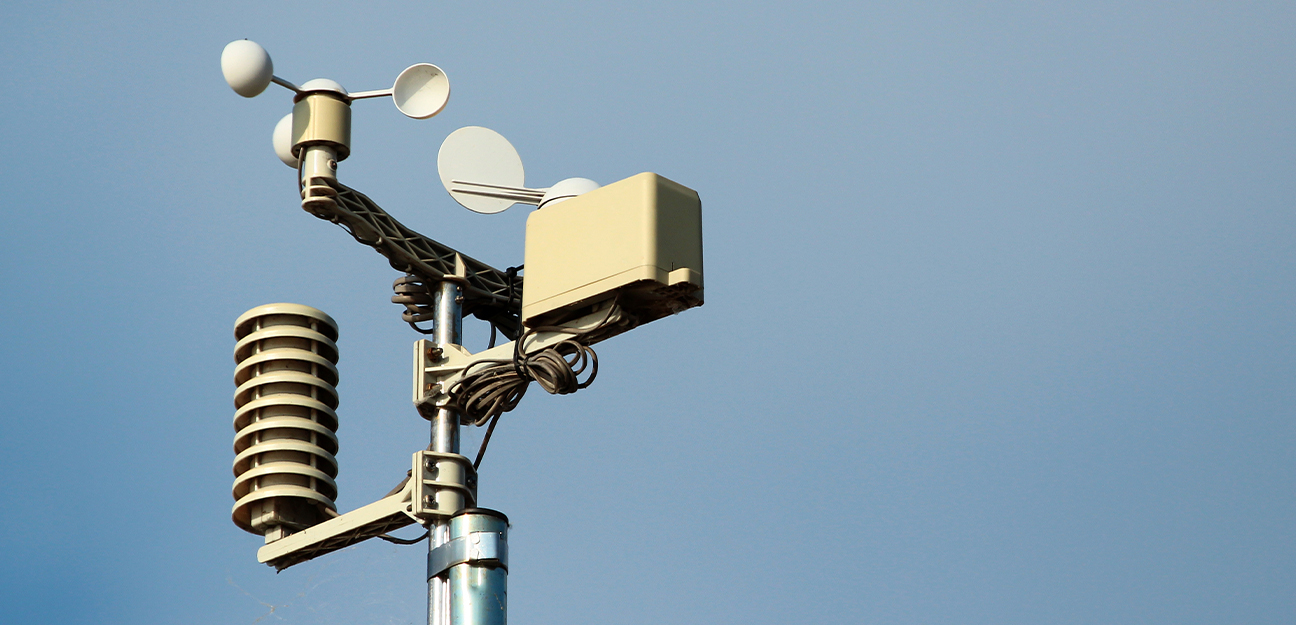
The Greater Caribbean region is exceptionally vulnerable to hydrometeorological hazards that continue to wreak havoc on national economies and livelihoods.[1] Hurricanes, floods, droughts and storm surges are occurring with greater frequency and at higher intensities, as a direct result of the worsening climate crisis. The transboundary nature of these hazards is modelled in the recent example of Hurricane Melissa, which severely impacted livelihoods and economies across Cuba, Jamaica, Haiti, the Dominican Republic, and the Bahamas. World Meteorological Day, celebrated annually on 23 March, commemorates the establishment of the World Meteorological Organisation (WMO) in 1950; an organisation built on promoting the essential contribution of national meteorological and hydrological services to the safety and wellbeing of society.[2] This year’s theme of “Observing Today, Protecting Tomorrow” focuses on meteorological observations and their role in enabling disaster preparedness, through forecasting and early warning systems. In the context of the Greater Caribbean Region, investment in strengthening early warning systems and meteorological cooperation is essential for regional resilience and disaster risk reduction.
The collection and application of meteorological data form the backbone of early warning systems and play a critical role in saving lives and reducing economic losses. In the Greater Caribbean, these systems have already demonstrated their value. For example, Cuba’s early warning mechanisms enabled the safe evacuation of about 735,000 people ahead of Hurricane Melissa’s landfall.[3] Another example is seen in Haiti, where forecasts of heavy rainfall in November 2023 enabled authorities to activate anticipatory measures that disseminated early warning messages to over 500,000 people and also delivered cash assistance to vulnerable households ahead of expected flooding.[4]Observations of key meteorological data, enable nations to track storms, forecast floods, monitor droughts, and map trends in climate analysis, consequently paving the way for informed and effective decision-making in disaster preparedness.
Strengthening the capability to collect, distribute and apply meteorological data to drive the functioning of early warning systems is a global priority under the Sendai Framework for Disaster Risk Reduction 2015-2030 and the Early Warnings for All Initiative, which aim to ensure universal access to early warning systems by 2027.[5] For the hazard-prone Greater Caribbean, these systems are vital to protecting communities and informing decision-making across key sectors, such as health, agriculture, energy, and transport while supporting climate resilience goals under the Paris Agreement.
As previously mentioned , it is undeniable that the Greater Caribbean region is among the most climate-vulnerable in the world, exposed to hurricanes, coastal flooding, and extreme rainfall.1 These hazards pose a serious threat to national economies and livelihoods in the region, with average annual storm-related losses in the region estimated at about 17% of the national GDP.[6] In extreme cases, the consequences are even more severe; following Hurricane Maria in 2017, Dominica recorded economic losses equivalent to about 226% of its national GDP.6
With so much at risk, regional cooperation in meteorological monitoring and information sharing is critical. Institutions such as the UWI Seismic Research Center (USRC), a regional body, demonstrate the value of coordinated observation networks. Ahead of the 2021 eruption of La Soufrière, the USRC provided early warning signals that supported preparedness measures in Saint Vincent and the Grenadines.[7] Expanding existing monitoring networks and strengthening data sharing among meteorological services in the Greater Caribbean would significantly elevate the implementation of effective early warning systems, and thereby directly contributing to disaster preparedness and resilience planning. Aligning with the theme of observing today, protecting tomorrow.
The Association of Caribbean States (ACS) is therefore a critical actor in supporting the advancement of regional cooperation for disaster risk reduction, enabling the collection and distribution of meteorological data across the Greater Caribbean. Through its Special Committee on Disaster Risk Reduction, the ACS provides a platform for 25 Member States and 10 Associate Members to engage in meaningful exchanges of knowledge, strengthen institutional capacity, and promote collaborative approaches to managing natural hazards. The ACS comprises a wide-network, facilitating dialogue and cooperation among not just governments, but also regional institutions and technical partners, thereby strengthening the systems and partnerships necessary to enhance disaster resilience throughout the region.
These strategic efforts are further reinforced by the political commitments of ACS Member States and Associate Members, reflected in regional agreements such as the Declaration of Montería and the Declaration of Antigua. Both declarations underscore the importance of strengthening regional cooperation to address the growing impacts of the climate crisis and natural hazards in the region. In particular, they reaffirm the collective commitment of Member States and Associate Members to advance disaster risk reduction, enhance early warning systems and preparedness mechanisms, and promote the sustainable development of the Greater Caribbean. By aligning these regional commitments with the priorities outlined in the ACS Plan of Action 2022-2028, the ACS is able to translate shared political vision into practical regional action.
In translating these commitments into practical action, the ACS has supported several initiatives aimed at strengthening disaster risk knowledge and warning capacities. One key initiative is the Caribbean Territorial Information Platform for Disaster Prevention (PITCA), which, completed in 2024, enhanced the capability of Member States to receive and share, in real-time, geospatial information on hazards, vulnerability, and risk to inform disaster preparedness and planning across the region. Likewise, the Strengthening Hydrometeorological Operations and Services in Caribbean SIDS (SHOCS) project, improved the capacity of national meteorological and hydrological services across Caribbean SIDS.[8] Through SHOCS, the ACS supported the enhancement of observation networks, forecasting capabilities, and early warning systems, contributing to stronger disaster risk governance and regional resilience.
These initiatives reflect the broader institutional commitment of the ACS to advancing disaster risk reduction through regional collaboration as outlined in the ACS Plan of Action 2022-2028 and other regional policy instruments. In doing so, the organisation contributes to the implementation of global frameworks such as the Sendai Framework for Disaster Risk Reduction 2015-2030, particularly its priority on strengthening disaster risk knowledge and improving the availability and use of data so that governments and communities can make informed decisions in the name of enhancing the economic, social, health and cultural resilience of persons, communities, countries and their assets, as well as the environment.[9]
As the international community observes World Meteorological Day, the importance of meteorological science, reliable data, and international cooperation becomes ever more evident in protecting communities from the impacts of extreme weather and climate-related hazards. For the Greater Caribbean, leveraging resources, like those facilitated by the ACS, to strengthen regional partnerships is key to building resilience against increasingly frequent and intense climate-related hazards.
Sustained investment of time, energy, and resources into meteorological observations and regional cooperation is critical. Early warning systems and anticipatory actions, depend on these foundational mechanisms to safeguard lives, economies, and ecosystems across the region. Strengthening meteorological observations and early warning systems also directly advance SDG 13 (Climate Action) by enhancing adaptive capacity and improving preparedness for climate-related hazards.[10] Illustrative examples such as Cuba’s National Civil and Defence Protection System, Haiti’s Anticipatory Action Plan, and St. Vincent’s anticipatory volcanic eruption response mechanism, underscore the relationships between meteorological data, early warning systems, anticipatory action, and the overarching need for regional cooperation to support resilience.
In this sense, embracing collaboration and working collectively to observe today, to act on the knowledge gained, the nations of the Greater Caribbean can better protect their communities and ensure a more resilient tomorrow.


Share


Related Articles

World Environment Day 2026: Climate Action — “Inspired by Nature. For Climate. For Our Future”
By: Anaïs Régina-Renel

International Mother Earth Day 2026

The Establishment of the ACS Sargassum Sub-Commission: Toward a Coordinated and Integrative Approach to Sargassum Management in the Greater Caribbean
Written by: Damiens Nicolas, Volunteer (France Volontaire m, Guadel
From Risk to Resilience: Strengthening Disaster Risk Reduction for All People
ByJonathan Alexander, Research Assistant, Directorate for Disaster Risk Reduction, Sustaina