


ACS and GSTC Convene Regional Webinar to Advance Sustainable Tourism Destinations Across the Greater Caribbean
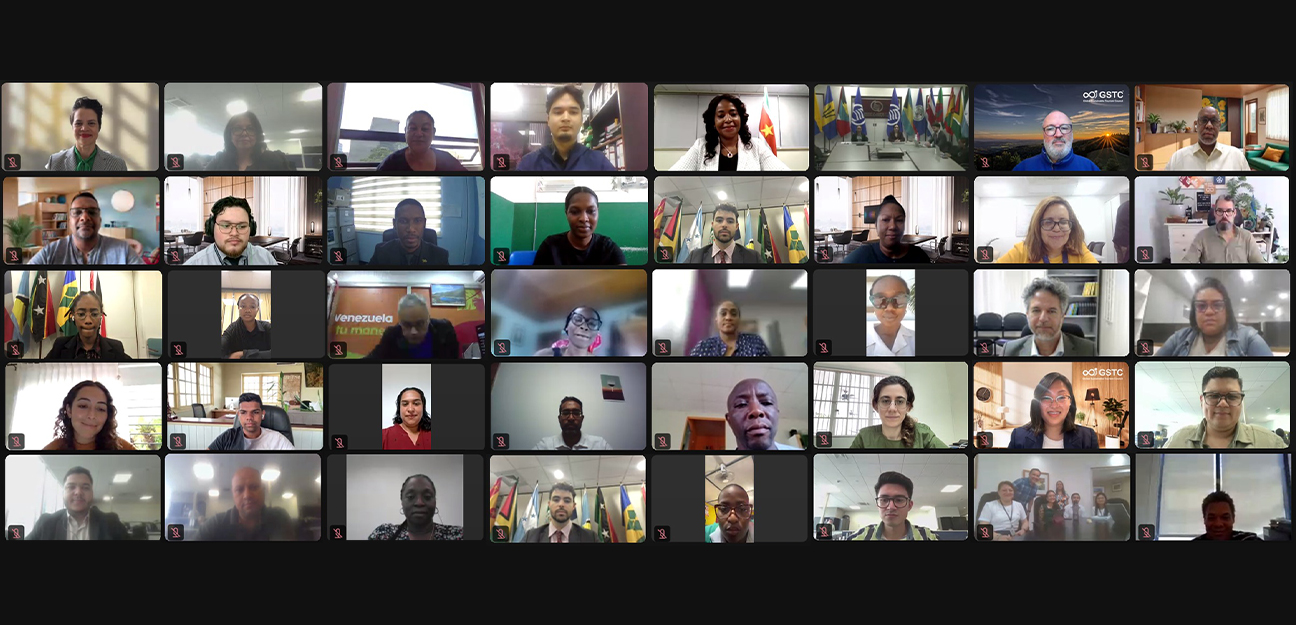
Port of Spain, Trinidad and Tobago | 8 May 2026 — The Association of Caribbean States (ACS), in partnership with the Global Sustainable Tourism Council (GSTC), successfully hosted a regional webinar titled “Building Sustainable Tourism Destinations – From Policy to Practice: A Guide to GSTC’s Destination Tools for Sustainable Tourism Development,” bringing together more than 100 participants from across the Greater Caribbean and beyond. The programme included expert contributions from Wendy Li, National Programs Director, GSTC; Jorge Moller, Program Director – Latin America & Caribbean, GSTC; and Shaneil Sutherland, Tourism Consultant, ACS, Directorate for Disaster Risk Reduction, Sustainable Tourism, Caribbean Sea and the Environment.
Held virtually, the session responded to the growing urgency for destinations to manage tourism growth responsibly. With international travel reaching record levels in recent years, the webinar emphasized that strong demand must be matched with stronger systems to protect destinations’ environmental and cultural heritage assets, while ensuring tourism delivers fair and lasting benefits to host communities.
The webinar introduced participants to the GSTC Standards, Guidelines and Destination Assessment Tools, including the Destination Self-Assessment Tool—a mechanism that destinations can use to benchmark and improve sustainability performance across key pillars: Sustainable Management, Socioeconomic Impacts, Cultural Impacts, and Environmental Impacts. Participants explored how these instruments can support evidence-based decision-making and strengthen policies and programmes that balance growth with the protection of natural and cultural heritage.
The session also facilitated dialogue among regional stakeholders to identify shared challenges and solutions that can support national tourism development organizations in advancing sustainable tourism policies and strategic action plans.
The ACS calls for a shift in the region’s tourism model
In her remarks, H.E. Noemí Espinoza Madrid, ACS Secretary-General, reaffirmed that the Greater Caribbean—“everyone that touches the Caribbean Sea”—shares both a common identity and a common vulnerability, and that tourism, while a cornerstone of regional economies, must evolve to meet today’s realities.
The ACS Secretary-General stressed that sustainability must no longer be treated as optional, noting that “sustainability… is a strategic condition”—environmentally and socially. She highlighted the need for more equitable benefit-sharing and for tourism to expand opportunities for women, youth, indigenous peoples, Afro-descendant populations, and local communities, while underscoring that ecosystem protection is a shared responsibility among governments, the private sector, communities, and visitors.
Emphasizing implementation, the ACS Secretary-General urged a shift toward real-world delivery: moving beyond broad statements to concrete decisions, consistent practices, and meaningful collaboration—supported by measurable criteria and practical tools that destinations can adapt and scale.
Sustainable tourism transformation is a core pillar of the ACS Future Initiatives 2035 (ACSFI2035), the organization’s regional framework to advance resilience, sustainability, and inclusive development across the Greater Caribbean grounded in the protection and sustainable stewardship of the Caribbean Sea.
In this context, commitments must be matched by practical action within territories and everyday decision-making. By introducing destinations to GSTC standards and assessment tools that enable benchmarking, priority-setting, and continuous improvement, the webinar provided a clear pathway for converting sustainability objectives into measurable destination-level progress—the type of results-focused cooperation that ACSFI2035 is designed to advance.


Share


